
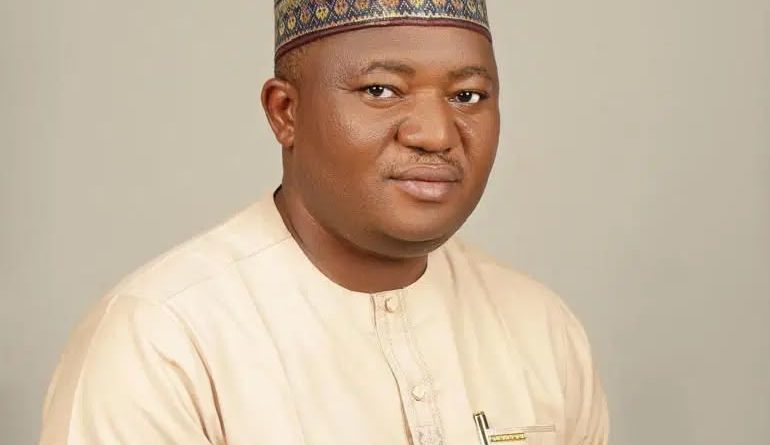
How Prof. Nasir Abdulsalam’s Strategic Leadership is Reviving Ajaokuta Steel Through Historic 20-Year Gas Supply Deal
Ajaokuta Steel Company has recorded a major milestone with the signing of a 20-year gas supply agreement with NNPCL under the leadership of Managing Director Prof. Nasir Abdulsalam, raising fresh hopes for the revival of Nigeria’s long-awaited steel industry.

For decades, the Ajaokuta Steel Company has symbolised Nigeria’s unrealised industrial ambition, surviving successive administrations, policy shifts and repeated promises of revival without achieving full commercial production. However, recent developments at the steel complex have renewed optimism that the country’s long-awaited industrial dream may finally be within reach.
At the centre of the renewed confidence is the Managing Director and Chief Executive Officer of Ajaokuta Steel Company Limited, Professor Nasir Naeem Abdulsalam, whose first year in office has culminated in the signing of a landmark 20-year Gas Supply Agreement and Memorandum of Understanding (MoU) with the Nigerian National Petroleum Company Limited (NNPCL).
The agreement is widely regarded as one of the most significant breakthroughs in the history of the steel plant, as it addresses what industry experts and prospective investors have consistently identified as one of the biggest obstacles to the commencement of full-scale steel production—reliable and uninterrupted energy supply.
Rather than pursuing headline-grabbing announcements during his first year in office, Professor Abdulsalam adopted what many observers describe as a deliberate and strategic approach focused on resolving the critical structural challenges that have stalled the project for over four decades.
His quiet but methodical leadership has now produced a development many consider capable of transforming the fortunes of the Ajaokuta Steel Complex.
Before assuming office as Managing Director, Professor Abdulsalam served as Technical Adviser to the Minister of Steel Development and Special Assistant (Academics) to the Director-General of the National Institute for Legislative and Democratic Studies (NILDS), experiences that strengthened his understanding of both the technical and policy dimensions of Nigeria’s steel sector.
His appointment was seen by many stakeholders as bringing academic competence and industry knowledge to a project that has historically suffered from inconsistent policy direction.
The newly executed gas supply arrangement guarantees long-term access to natural gas for the steel complex over the next two decades, providing the energy required to power its operations and significantly improving investor confidence.
Beyond powering the steel plant, the partnership with NNPCL is also expected to position Ajaokuta as a strategic supplier of steel products required for Nigeria’s oil and gas industry, including pipes and other critical infrastructure components needed for pipeline expansion projects across the country.
Analysts believe integrating the steel complex into Nigeria’s broader industrial and energy value chain could accelerate the country’s industrialisation agenda while reducing dependence on imported steel products.
A fully operational Ajaokuta Steel Company is also projected to generate thousands of direct and indirect employment opportunities, stimulate local manufacturing, strengthen indigenous capacity in the construction sector and position Nigeria as a potential steel production hub within the West African sub-region.
The availability of guaranteed gas supply is expected to remove a longstanding concern among prospective investors, paving the way for additional investments needed to complete outstanding rehabilitation works and commence commercial production.
Despite the optimism surrounding the latest breakthrough, stakeholders caution that the gas supply agreement represents a critical foundation rather than the final destination.
Observers maintain that the true measure of success will be seen when steel production begins, with blast furnaces operational and finished products reaching Nigerian industries and export markets.
To sustain the momentum, experts have called on the Federal Government to accelerate the release of funds required for the completion of rehabilitation works while implementing a transparent production roadmap with clearly defined milestones.
They also advocate the rehabilitation of supporting infrastructure, including road and rail networks linking the steel complex, particularly the Ajaokuta-Lokoja corridor, to facilitate efficient movement of raw materials and finished products.
In addition, continued engagement with host communities, organised labour, investors and relevant government institutions has been identified as essential to protecting the project from policy inconsistencies and political disruptions that undermined previous revival efforts.
With one of the most critical challenges now addressed through the long-term gas supply agreement, many industry stakeholders believe Nigeria has taken a significant step toward actualising the vision that inspired the establishment of Ajaokuta Steel Company over four decades ago.
Whether the current momentum ultimately translates into commercial steel production will depend on the successful implementation of the remaining phases of the revitalisation programme. For now, however, the latest development has rekindled hope that one of Africa’s largest integrated steel projects may finally be approaching operational reality.