
About Kogi State
History, Culture, Geography and Key Facts About Nigeria’s Confluence State
Kogi State, popularly known as “The Confluence State,” occupies a unique position in Nigeria’s geography, history, and cultural landscape. Situated in the North-Central region of the country, Kogi is widely recognized as the point where two of Africa’s great rivers — the River Niger and the River Benue — meet at Lokoja, the state capital.


The meeting of these rivers forms one of the most remarkable geographical landmarks in West Africa. For centuries, the confluence has symbolized not only a physical meeting of waterways but also the convergence of peoples, cultures, and histories that define the identity of Kogi State today.
With its central location, diverse population, and rich historical heritage, Kogi State remains one of the most significant states in Nigeria’s political, cultural, and economic landscape.
Geographic Location and Landscape
Kogi State lies in the North-Central geopolitical zone of Nigeria, occupying a strategic position that links the northern and southern parts of the country. Because of this central location, the state has long served as a major corridor for transportation, commerce, and cultural exchange.
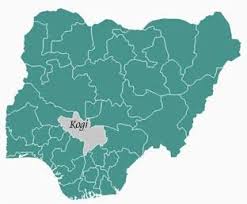

The state shares boundaries with numerous states across Nigeria, including:
- Niger State
- Nasarawa State
- Benue State
- Enugu State
- Anambra State
- Edo State
- Ondo State
- Ekiti State
- Kwara State
- Abuja Federal Capital Territory
Its land area is estimated at about 27,747 square kilometres, consisting largely of wooded savannah vegetation and fertile agricultural land.
The Niger River runs through the state from the northwest to the south, while the Benue River forms part of its northeastern boundary before joining the Niger at Lokoja. This unique geographical configuration has historically made Kogi an important centre for trade routes and settlement patterns.
Population of Kogi State
Understanding the population of Kogi State is important for appreciating its social and economic dynamics.
The 2006 National Population Census placed the population of Kogi State at 3,314,043 people. However, like many states in Nigeria, the population has grown significantly since then.
Recent demographic projections estimate that the population of Kogi State is now around 4.7 million to 4.8 million people, reflecting steady growth due to urban expansion, economic activity, and natural population increase.
The population is spread across 21 Local Government Areas (LGAs), including Lokoja, Okene, Dekina, Ankpa, Kabba/Bunu, Idah, and Yagba West.
Among these, Okene, Ankpa, and Dekina are among the most densely populated areas in the state.
Kogi’s population is relatively youthful, with a large percentage of residents below the age of 35. This demographic structure provides both opportunities and challenges in areas such as education, employment, and economic development.
Historical Background of Kogi State
The area now known as Kogi State has a long and complex history that predates colonial rule.


Before the arrival of Europeans, the region was home to powerful traditional kingdoms and communities. These societies developed sophisticated political systems, trade networks, and cultural traditions.
Among the most prominent traditional kingdoms historically connected to the region are:
- The Igala people kingdom centred around Idah
- The Ebira people communities in present-day Kogi Central
- The Okun people communities in Kogi West
Other groups such as the Bassa, Kakanda, Nupe, and Oworo also formed important parts of the region’s early settlement history.
During the colonial era, the British established administrative control over the region and organized it into a territory known as Kabba Province.


Kabba Province later became one of the most important administrative divisions in Northern Nigeria under colonial rule.
Lokoja and Its Role in Nigerian History
The city of Lokoja occupies a particularly important place in Nigeria’s history.
Located at the confluence of the Niger and Benue rivers, Lokoja developed into a strategic trading and administrative centre during the nineteenth century.
British merchants established trading posts in the area in the late 1850s, and the Scottish explorer William Balfour Baikie founded Lokoja as a major commercial settlement.
The town later became the site of the first British consulate in the interior of Nigeria and eventually served as the administrative headquarters of the Royal Niger Company.
Because of its strategic position and administrative significance, Lokoja later became the capital of Kabba Province during the colonial period and eventually the capital of the newly created Kogi State in 1991.
Today, Lokoja remains an important historical city with numerous colonial relics and monuments.
Creation of Kogi State
Modern Kogi State was officially created on 27 August 1991 by the military administration of Ibrahim Babangida.
The state was formed from parts of Kwara State and Benue State.
The creation of the state was intended to reunite communities that had historically lived together under Kabba Province but had been separated during earlier administrative restructuring in Nigeria.
Since its creation, Kogi State has grown steadily in terms of political development, infrastructure, and economic activity.
Ethnic Groups and Cultural Diversity
Kogi State is one of the most culturally diverse states in Nigeria.
The three major ethnic groups in the state are:
- Igala people
- Ebira people
- Okun people
These groups occupy different parts of the state and maintain rich cultural traditions expressed through language, festivals, music, and traditional governance systems.
Other ethnic communities in the state include:
- Bassa
- Nupe
- Kakanda
- Oworo
- Ogori
- Gwari
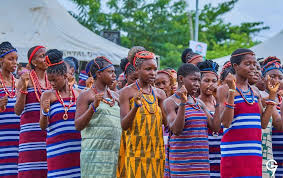


Traditional festivals such as the Ekuechi festival among the Ebira people; Ovia Osese festival among the Ogori people; Ogoh Iyale festival among the Igala people; and Odun Isu Titun/Ode festival in Okun land and other community celebrations remain important expressions of cultural identity.


Economy and Natural Resources
The economy of Kogi State is built largely on agriculture, mining, and trade.
Agriculture remains the main occupation for many residents, with farmers producing crops such as:
- Cassava
- Yam
- Rice
- Maize
- Cashew
- Palm produce
Kogi State is also rich in solid mineral resources, including:
- Iron ore
- Limestone
- Marble
- Coal
- Gemstones
The presence of mineral deposits has encouraged industrial development in areas such as Ajaokuta, which is home to the Ajaokuta Steel Company, one of Nigeria’s most ambitious industrial projects.


Because of its central location and road networks connecting many states, Kogi also plays an important role in national commerce and transportation.
Tourism and Natural Attractions
Kogi State possesses many tourism attractions that reflect its history and natural beauty.
Among the most notable sites are:
- Niger–Benue Confluence
- Mount Patti
- Iron of Liberty
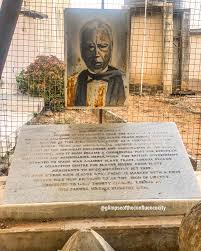

These attractions draw visitors interested in Nigeria’s colonial history and natural landscapes.
The confluence itself remains one of the most visited tourist landmarks in the state.
Local Government Areas
Kogi State is administratively divided into 21 Local Government Areas. These include:
Adavi, Ajaokuta, Ankpa, Bassa, Dekina, Ibaji, Idah, Igalamela-Odolu, Ijumu, Kabba/Bunu, Lokoja, Mopa-Muro, Ofu, Ogori/Magongo, Okehi, Okene, Olamaboro, Omala, Yagba East, and Yagba West.
Each of these LGAs contributes to the cultural and economic life of the state.
Why Kogi State Is Called the Confluence State
Kogi State earned the nickname “The Confluence State” because the Niger and Benue rivers meet at Lokoja.
This natural meeting point has historically served as a strategic trading route connecting northern Nigeria with the southern regions.
Over time, the confluence has become a symbol of unity and diversity — representing the meeting of cultures, traditions, and communities across the state.
Kogi State Today
More than three decades after its creation, Kogi State continues to evolve as an important political and economic centre in Nigeria.
Its central location, diverse population, natural resources, and historical significance make it one of the most strategically positioned states in the country.
From the ancient kingdoms of the Igala and Ebira peoples to the colonial history of Lokoja and the modern development of its cities and towns, Kogi State remains a place where history, culture, and opportunity meet.
As the Confluence State, it stands as a symbol of the coming together of Nigeria’s past, present, and future.