
Kogi Begins 2025/2026 Annual School Census Sensitisation, Introduces LIN for All Students
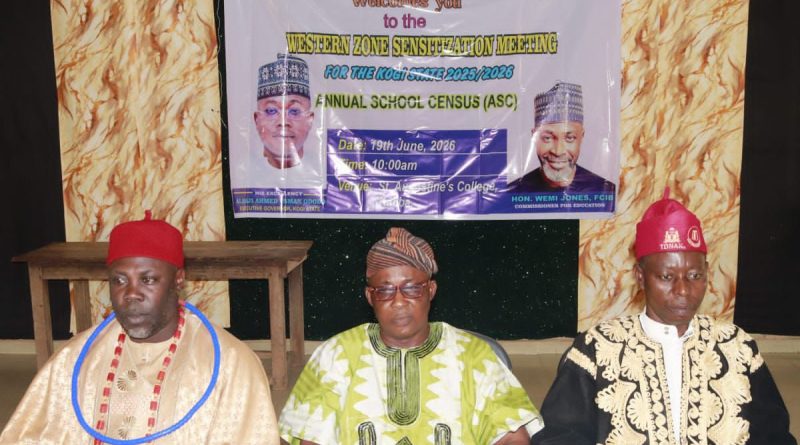
Kogi State has commenced sensitisation for the 2025/2026 Annual School Census ahead of its June 24 rollout, with Commissioner for Education, Wemi Jones, emphasizing accurate data collection and the introduction of the Learner Identification Number (LIN) through the DNEMIS platform.
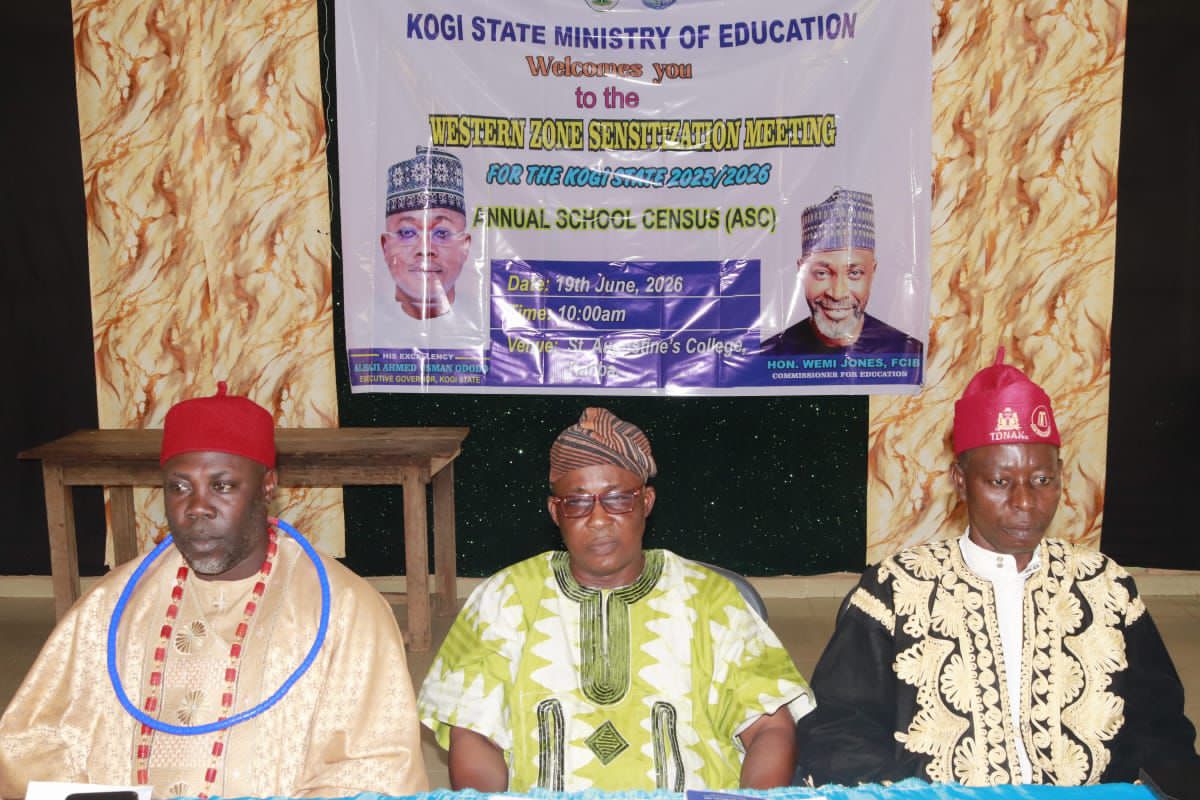
Kogi State has commenced a statewide sensitisation campaign for the 2025/2026 Annual School Census (ASC), a major initiative aimed at strengthening educational planning, improving resource allocation, and enhancing policy implementation across schools in the state.
The exercise, which began in Kogi West Senatorial District at St. Augustine College, Kabba, is part of preparations for the full deployment of the Annual School Census scheduled to commence on June 24, 2026.
Speaking at the sensitisation programme, the Kogi State Commissioner for Education, Hon. Wemi Jones, FCIB, described the census as a vital tool for building a more responsive, inclusive, and effective education system. He stressed that reliable data remains the foundation upon which meaningful educational reforms and interventions are built.
According to him, every piece of information gathered during the census represents a learner, a teacher, a classroom, and ultimately the future of the state’s education sector.
The Commissioner noted that several landmark educational interventions by the Kogi State Government, including the implementation of free education policies and the payment of external examination fees for students, have been driven by credible and verifiable educational data.
He called on school proprietors, principals, head teachers, education secretaries, local government officials, education evaluators, and school data officers to cooperate fully with the exercise by ensuring the submission of accurate and timely information.
Jones disclosed that the Federal Ministry of Education has adopted the Digital Nigeria Education Management Information System (DNEMIS) as the national platform for educational data management. Under the new framework, every school will be assigned a unique identification number, while every learner will be issued a Learner Identification Number (LIN), creating a comprehensive national education database.
He warned that schools that fail to participate in the census exercise risk excluding their learners from the national database, potentially affecting access to future educational opportunities and government interventions tied to the Learner Identification Number.
The Commissioner explained that the LIN would serve as a lifelong educational identity, tracking students from primary school through tertiary education and even during the National Youth Service Corps (NYSC) programme.
To ensure smooth implementation, he said the ministry would continue conducting training sessions for school data officers and education stakeholders across all local government areas of the state.
Delivering a technical presentation, the State Education Management Information System (EMIS) Officer, Mr. Victor Iselewa, described the Annual School Census as the backbone of educational planning and decision-making.
He explained that the census captures critical information on student enrolment, teacher distribution, infrastructure, sanitation facilities, learning resources, and other indicators required for effective policy formulation and equitable resource allocation.
Iselewa said the DNEMIS platform would provide a centralised national repository for educational data, allowing government agencies to track learner progression, monitor school performance, identify out-of-school children, and strengthen educational reforms through evidence-based planning.
According to him, the platform is also designed to integrate with national identity and educational databases, improving transparency and accountability within the education sector.
Addressing concerns from private school operators, he clarified that the Annual School Census is strictly for educational planning, research, and policy development, and not for taxation purposes.
Earlier, the Chairman of the All Nigeria Confederation of Principals of Secondary Schools (ANCOPSS), Kabba-Bunu Chapter, Mr. Emmanuel Abolusoro, commended the Ministry of Education for decentralising the sensitisation exercise and taking the campaign directly to the senatorial districts.
He noted that the approach has improved stakeholder participation and reduced the challenges associated with long-distance travel.
Also speaking, the Onu-Igala of Kabba and Oga-Ataa Igala Ede, His Royal Highness Chief Onuche Zico Isaac Idoko, described the initiative as timely and beneficial to the future of education in the state.
The traditional ruler said the introduction of the Learner Identification Number would provide government with accurate educational statistics needed for effective planning and sustainable investment in the sector.
He praised Governor Ahmed Usman Ododo and the Commissioner for Education for championing the initiative and assured the ministry of the support of traditional institutions toward its successful implementation.
The Ministry of Education said similar sensitisation programmes would be held in Kogi Central and Kogi East Senatorial Districts before the official commencement of the census.
Stakeholders at the event expressed optimism that the exercise would generate reliable educational data capable of supporting informed policy decisions, improving service delivery, and advancing the overall development of education in Kogi State.