
INEC and the Misuse of “Status Quo”: A Threat to Democratic Order
By Christopher Sunday
The recent action of the Independent National Electoral Commission in removing the name of David Mark from its portal is not only questionable—it is a troubling misapplication of judicial instruction.
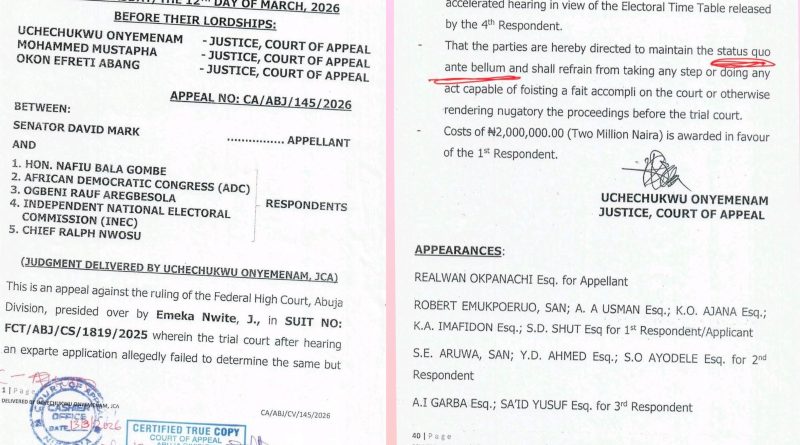
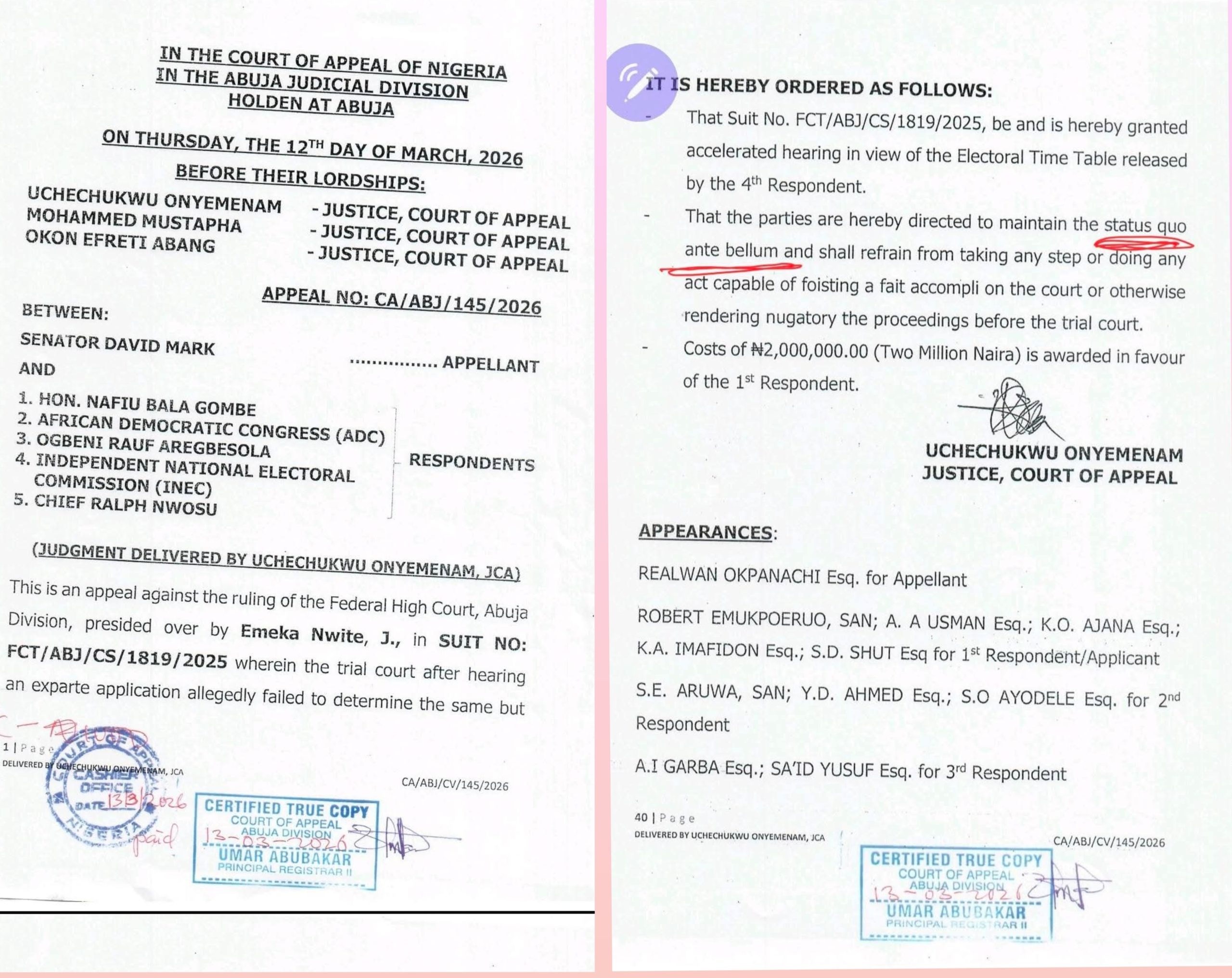
A careful reading of the judgment of the Court of Appeal reveals that the directive to maintain the status quo has been fundamentally misunderstood. In law, status quo is a doctrine of preservation, not disruption. It exists to protect an already established condition from interference pending final adjudication.
Before the litigation, a leadership structure existed within the African Democratic Congress—a structure that produced David Mark and his team. That was the operative reality before the court. That was the status quo.
INEC’s decision, therefore, does not preserve that reality; it dismantles it.
This raises a fundamental question: when did administrative bodies begin to assume the authority to reinterpret clear judicial directives in ways that alter the very subject of litigation? By removing a recognized leadership, INEC has not acted as a neutral umpire but as an active participant in a dispute it ought to stand above.
Neutrality does not mean erasing reality. Neutrality means respecting it.
The implications of this action extend far beyond the internal affairs of a political party. It strikes at the core of institutional responsibility in a democracy. If INEC can suspend an existing leadership under the guise of compliance, then no political structure is immune from administrative overreach.
Today, it is the ADC. Tomorrow, it could be any other party.
Democracy cannot thrive where institutions abandon logic for convenience. The law is not an instrument for administrative experimentation, and judicial pronouncements are not invitations for selective interpretation.
INEC must, as a matter of urgency, retrace its steps. Anything short of that risks deepening political uncertainty and eroding public confidence in the very institution entrusted with safeguarding Nigeria’s electoral integrity.