
Kogi West: Questions Trail Karimi’s Security Claim Over Court Relocation as He Continues Stakeholder Engagements
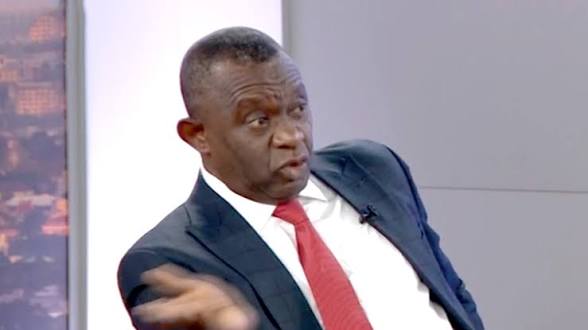
Senator Sunday Karimi’s reported request for the relocation of the ongoing court proceedings from Lokoja to Abuja on security grounds has opened a fresh political conversation in Kogi West, with questions being raised over the apparent contrast between the security concerns cited in court and the senator’s continued political activities across the same area.
Security is undoubtedly a serious concern, and any genuine threat to the safety of litigants, lawyers, judicial officers or members of the public deserves proper attention. However, the circumstances surrounding the request have also invited scrutiny because Karimi has continued to move around Kogi West, meeting political stakeholders, supporters, party leaders and traditional rulers.
From July 24, the senator was reportedly on stakeholders engagement in Kabba-Bunu. The following day, he moved to Egbe, where he met party leaders, attended an ECWA service and later engaged traditional and royal fathers in Isanlu. More recently, he was in Kabba, where he addressed supporters from Kabba-Bunu and Ijumu and reportedly spent the night.
These movements do not, by themselves, invalidate any security concern. A politician travelling with security arrangements is not necessarily evidence that an area is completely safe. Nevertheless, the pattern raises a legitimate question: if the security situation is serious enough to warrant taking a judicial proceeding out of Lokoja, how is the same environment being assessed when political meetings and stakeholder engagements are taking place across Kogi West?
That is the question many residents and political observers would expect to be answered with facts rather than political arguments.
The issue becomes even more sensitive because the dispute is connected to a contested electoral matter involving Hon. Aro Samuel Bamidele. In such circumstances, every move by the parties is naturally viewed through a political lens. A request for judicial relocation, particularly when justified on security grounds, therefore requires transparency if public confidence in the process is to be maintained.
There is also the question of the Presidency. President Bola Ahmed Tinubu’s name should not become a convenient political shield or weapon in a dispute that is fundamentally subject to judicial determination. The President represents the Federal Republic of Nigeria and not one side of a political contest in Kogi West. If there are genuine security concerns, the appropriate security institutions have the constitutional responsibility to assess them and take necessary measures.
Likewise, if Senator Karimi believes that his case has sufficient merit, the most credible route remains the courtroom. Evidence, electoral documents, witness testimony and legal arguments should determine the outcome, rather than competing narratives outside the court.
The irony that has attracted attention is not that Karimi has raised security concerns, but that those concerns are being raised alongside continued political engagement in the same geographical environment. That contrast deserves explanation, especially in a state where public confidence in both political and judicial processes is important.
Kogi should not be portrayed as unsafe merely for political convenience, just as genuine insecurity should not be dismissed because political activities are continuing. Both positions can be harmful. The appropriate approach is to allow competent security agencies to establish the facts while the judiciary handles the electoral dispute.
For the people of Kogi West, the expectation is straightforward: let there be security, let there be a fair hearing and let the courts determine the dispute without intimidation or political theatrics.
Senator Karimi is entitled to pursue every lawful avenue available to him. His opponents are equally entitled to challenge his claims. But ultimately, neither stakeholder meetings in Kabba, political engagements in Egbe and Isanlu, nor appeals to Abuja should substitute for the evidence required in court.
Kogi West deserves a judicial process that is credible enough for all sides to accept its outcome. The state should not become collateral damage in a political struggle. If there is a security threat, let it be addressed transparently. If there is an electoral grievance, let it be argued rigorously. And if there is a case to be won, let the evidence do the winning.