

The Yagba in Leke Abejide
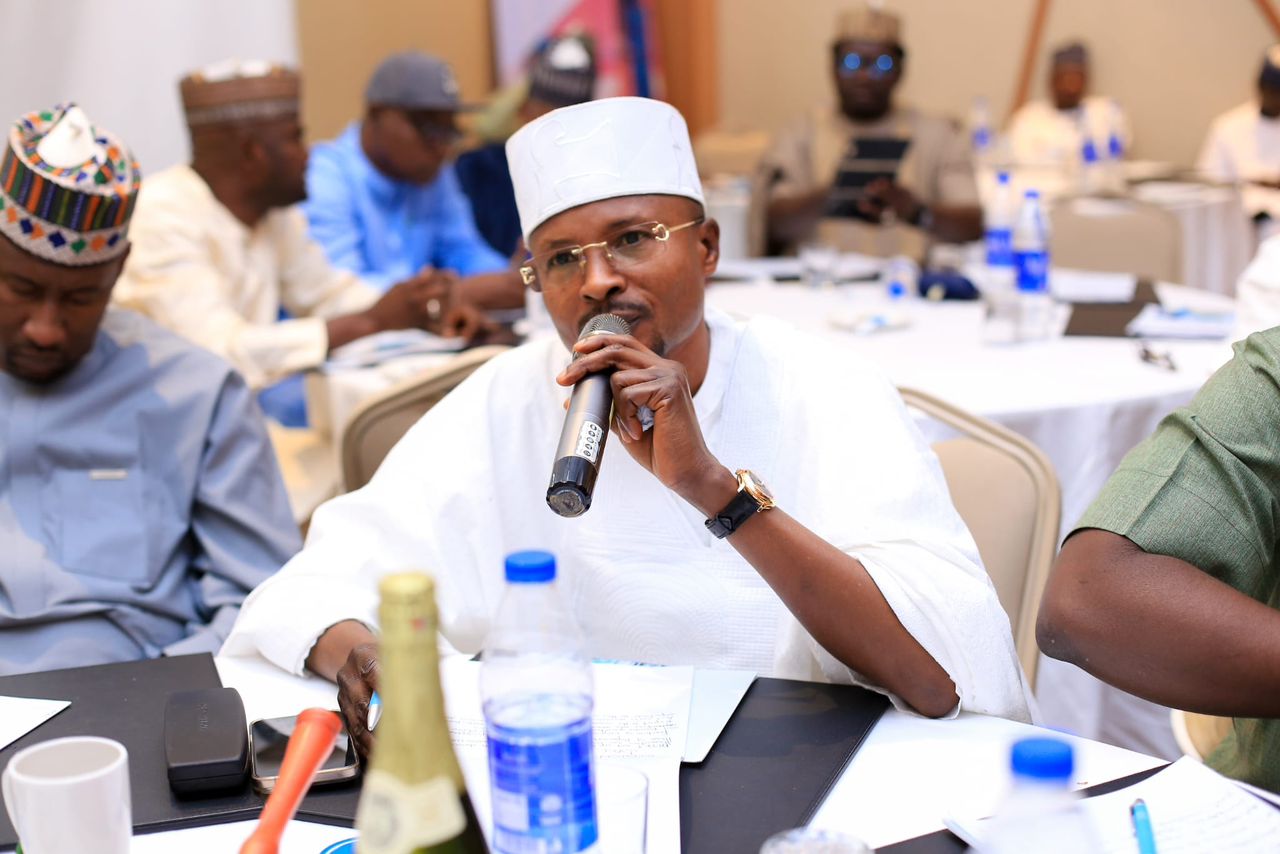
There are politicians who represent a constituency by occupying an office, and there are representatives whose identity becomes deeply connected with the people they serve. For Rt. Hon. Leke Joseph Abejide, the story of his political journey is increasingly inseparable from the story of Yagba itself.
To understand the growing conversation around Abejide’s third-term aspiration in 2027, it is important to look beyond political calculations and examine the relationship between the man, his people, and the constituency he represents. The question is not simply who wants to return to the House of Representatives, but what Yagba has found in Abejide and what his continued presence could mean for the constituency.
A Representative Shaped by His People
Yagba Federal Constituency is made up of Yagba East, Yagba West and Mopamuro Local Government Areas, communities with a strong history, distinct cultural identity and an enduring expectation of purposeful leadership.
Abejide’s political rise has been closely tied to this grassroots environment. His emergence and subsequent electoral successes on the platform of the African Democratic Congress demonstrated that political relevance could be built through direct connection with voters, even outside the traditional dominance of the major political parties.
That connection has remained one of the defining features of his representation.
For many of his supporters, the Abejide project is not simply about retaining a seat in Abuja. It is about maintaining a political channel through which Yagba’s interests can be projected into the national space.
Where Representation Meets Impact
Abejide’s record of constituency intervention has increasingly become central to the argument for continuity.
Education has been one of the strongest areas of his intervention. Through the Leke Abejide Foundation, students have received educational assistance, including support for WAEC registration. The foundation’s recent disbursement of more than ₦150 million towards the 2026 WAEC registration fees and administrative charges for eligible students in private secondary schools across Yagba, Kabba/Bunu and Ijumu underscores the scale of the educational intervention.
Although the programme extends beyond Yagba Federal Constituency, its broader reach reflects the lawmaker’s expanding influence within Kogi West and his willingness to deploy resources and relationships beyond the immediate boundaries of his mandate.
His interventions have also covered empowerment, healthcare, humanitarian assistance, youth development and community support.
These are areas that directly affect ordinary families. For a parent struggling to pay examination fees, a young person seeking economic opportunity, or a community requiring basic infrastructure, development is not an abstract political expression. It is something that must be experienced.
The Yagba Voice in Abuja
Perhaps the most significant part of the Abejide story is the transformation of grassroots popularity into national political relevance.
His background as a businessman and technocrat has contributed to a political style that combines enterprise, networking and strategic engagement. Over time, his position in the National Assembly and relationships across Nigeria’s political landscape have given him access to platforms where issues affecting Yagba can be presented and pursued.
This is where political influence becomes important.
A legislator does not only need to speak on the floor of the House. He must understand the institutions, build relationships, identify opportunities and know how to convert national access into local benefits.
Abejide’s growing relevance within the National Assembly has provided him with an opportunity to do precisely that.
When Yagba’s Problems Become National Issues
The Kabba-Egbe Road debate offers a useful example.
Abejide’s motion calling for the urgent reconstruction of the road brought the condition of the important highway before the House of Representatives and subsequently attracted attention from the Federal Ministry of Works.
The intervention demonstrated an important aspect of legislative representation: the ability to take a local problem and place it within the national policy and development agenda.
For Yagba, where roads remain critical to agriculture, commerce, transportation and community connectivity, such advocacy has direct economic implications.
Security as Part of Development
Abejide’s support for security institutions also demonstrates an understanding that development cannot be separated from safety.
His support for accommodation projects for Nigerian Army personnel at Chari Maigumeri Barracks in Lokoja, including the commissioning of additional accommodation units, represents a different form of constituency and public service.
By supporting the welfare of security personnel, he is contributing to the broader security architecture upon which communities, businesses and economic activities depend.
The significance becomes even more pronounced for Yagba, a region that has experienced security concerns and where the effectiveness of security agencies remains important to the lives and livelihoods of residents.
A Political Style Others Are Watching
Abejide’s influence is also becoming evident in the way other politicians and public office holders view constituency representation.
His approach, which combines legislative advocacy with direct humanitarian and developmental intervention, has increasingly become a reference point for politicians seeking stronger grassroots connections.
This is particularly significant because political influence is not always measured by the size of an office. Sometimes, it is measured by how many people begin to adopt the standards set by a leader.
The Abejide model has increasingly placed emphasis on visible impact, accessibility, empowerment and practical representation.
Why Continuity Matters
The debate over a third term should therefore be considered against the value of experience.
A returning legislator does not begin from zero. He returns with institutional memory, established relationships, legislative experience and a clearer understanding of how to navigate the complex machinery of government.
For Yagba, these advantages could translate into stronger advocacy for federal projects, greater access to national opportunities, expanded empowerment initiatives and more effective representation of constituency interests.
The political calculation is therefore straightforward: if influence is an asset, accumulated influence becomes even more valuable when it is deployed for development.
The Yagba in Abejide
Perhaps the most compelling description of Abejide’s political identity is found in the title itself: The Yagba in Leke Abejide.
It speaks to a politician whose public identity has increasingly been shaped by the aspirations, challenges and expectations of the people he represents.
The roads, schools, students, entrepreneurs, security institutions, families and communities that have benefited from his interventions are part of a larger story of representation.
It is a story that is still unfolding.
As Yagba approaches another electoral cycle, the conversation around Abejide’s third-term aspiration will naturally attract different opinions and competing political interests. That is the essence of democracy.
But beyond the politics of 2027 lies a more fundamental question: what kind of representation does Yagba need at this stage of its development?
If the answer is a representative with experience, national access, grassroots connection, legislative exposure and an established record of constituency intervention, then the case for continuity becomes a serious conversation.
Abejide’s greatest political asset may ultimately be that his story is no longer only about himself. It is increasingly about what Yagba can achieve through the influence, relationships and experience he has accumulated.
That is the essence of The Yagba in Leke Abejide: a political identity rooted in the people, strengthened by experience, and positioned for a larger chapter of service.