
Leke Abejide; The Influences
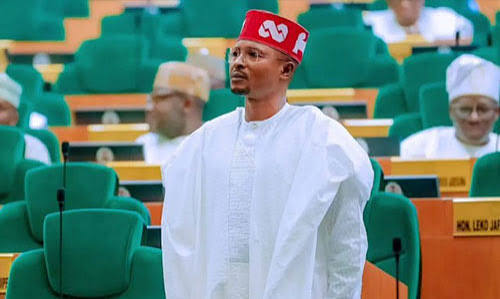
By J.O. Abel-Ontop for LekeLekanSi Media Team
In contemporary Nigerian politics, influence is not merely measured by position, but by impact, consistency, and the ability to shape outcomes both within and beyond one’s constituency. Rt. Hon. Leke Abejide has, over the years, built a distinct political identity rooted in these elements, positioning himself as one of the most consequential voices from Kogi West in the National Assembly.
From his emergence into elective politics, Abejide brought with him the mindset of a technocrat and seasoned businessman. This background has significantly shaped his approach to governance, allowing him to combine strategic thinking with practical execution. It is this blend that has not only earned him relevance in the House of Representatives but also secured him a respected place within Nigeria’s broader political structure. His influence today is not accidental; it is the product of deliberate engagement, performance, and the trust he has cultivated across different levels of leadership.
Grassroots Influence Built on Tangible Impact
At the heart of Abejide’s political strength lies his deep-rooted connection with the grassroots. Across Yagba West, Yagba East, and Mopamuro, his presence is felt not through rhetoric, but through visible interventions. From sustained payment of WAEC and NECO fees, to empowerment programmes, infrastructure support, and welfare initiatives, his leadership has consistently translated into real benefits for the people.
The activities of the Leke Abejide Foundation, long before and during his time in office, have further strengthened this connection. By addressing critical needs in education, health, and economic empowerment, the foundation has created a broad base of goodwill and loyalty. This has made Abejide not just a representative, but a dependable pillar within the constituency.
Institutional and Legislative Influence
Beyond the grassroots, Abejide’s influence extends into the legislative and policy-making space. As Chairman of the House Committee on Customs and Excise Duties, he occupies a strategic position that directly impacts national revenue generation, trade facilitation, and economic policy. His contributions in this role have enhanced his credibility among colleagues and stakeholders, reinforcing his status as a serious legislator with both technical understanding and political weight.
His ability to move motions that attract federal attention—such as interventions on critical infrastructure like the Kabba-Egbe Road—demonstrates how his influence translates into tangible outcomes. This capacity to connect constituency needs with national policy action is a defining feature of effective representation, and one that Abejide has consistently demonstrated.
Political Influence and Cross-Party Respect
One of the most notable aspects of Abejide’s political journey is his ability to command respect across party lines. In a political environment often defined by division, he has maintained relationships that cut across different political interests, earning recognition even from members of opposing parties.
This cross-party goodwill is a reflection of performance-driven politics. It underscores a reality increasingly acknowledged within Kogi State and beyond: that effective leadership cannot be ignored, regardless of political affiliation. Abejide’s influence, therefore, extends beyond his party, shaping conversations and decisions in wider political circles.
The Strategic Value of a Returning Legislator
As conversations around his third term bid gain momentum, it is important to understand the strategic advantage of returning experienced legislators to office. In parliamentary systems, influence is often built over time—through relationships, institutional knowledge, and a deep understanding of legislative processes.
A returning legislator like Abejide brings:
- Continuity in Representation: Ongoing projects, policies, and interventions are better sustained and completed.
- Stronger Institutional Leverage: Seniority enhances access, negotiation power, and committee influence.
- Expanded Networks: Years of engagement build alliances that can be mobilized for constituency development.
- Policy Effectiveness: Experience improves the ability to craft, sponsor, and influence impactful legislation.
For Yagba Federal Constituency, this translates into greater access to federal opportunities, stronger advocacy, and accelerated development. Replacing such experience often comes at the cost of lost momentum and diminished influence.
Influence as a Tool for Development
Abejide’s influence is not abstract; it is a working instrument for development. His strategic positioning within national structures has enabled him to attract attention, resources, and opportunities that directly benefit his constituency. Whether through educational interventions, economic empowerment, or infrastructure advocacy, his influence consistently finds expression in the lives of the people.
Moreover, his leadership style—anchored on service, integrity, and results—has begun to shape a new standard within the political space. Other politicians, legislators, and public office holders are increasingly taking cues from his model of grassroots engagement and performance-driven representation. This ripple effect further amplifies his influence, extending it beyond immediate political boundaries.
The Road Ahead
As Yagba looks toward the future, the question is not just about representation, but about sustained progress. Influence, when effectively deployed, becomes a catalyst for development, stability, and growth.
Rt. Hon. Leke Abejide has, through his journey, demonstrated that influence can be built on credibility, strengthened by performance, and sustained through service. His continued presence in the National Assembly offers not just experience, but a strategic advantage for Yagba Federal Constituency.
In the evolving landscape of Nigerian politics, where results increasingly define relevance, Abejide stands as a clear example of how influence—properly earned and responsibly used—can transform representation into measurable progress.